




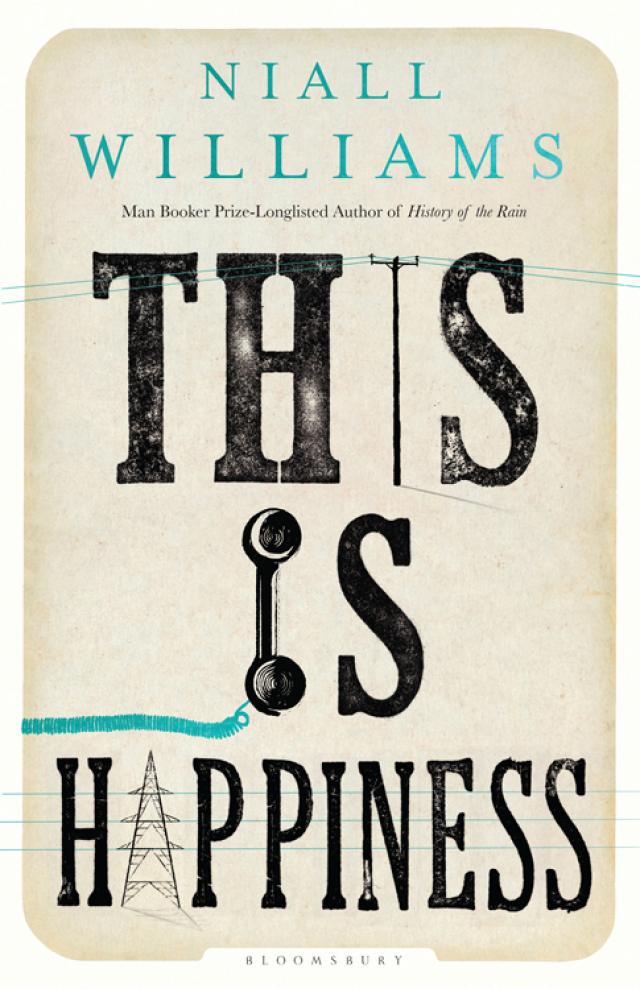
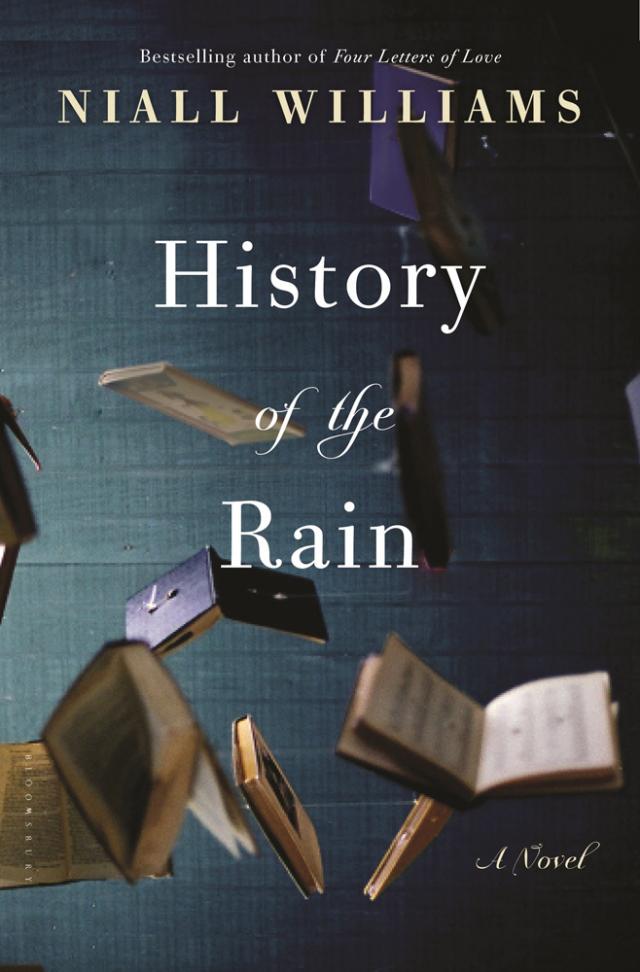
History of the Rain
Niall Williams
Fiction
We are our stories. We tell them to stay alive or keep alive those who only live now in the telling. That's how it seems to me, being alive for a little while, the teller and the told.So says Ruthie Swain. The bedridden daughter of a dead poet, home from college after a collapse (Something Amiss, the doctors say), she is trying to find her father through stories—and through generations of family history in County Clare (the Swains have the written stories, from salmon-fishing journals to poems, and the maternal MacCarrolls have the oral) and through her own writing (with its Superabundance of Style). Ruthie turns also to the books her father left behind, his library transposed to her bedroom and stacked on the floor, which she pledges to work her way through while she's still living.In her attic room, with the rain rushing down the windows, Ruthie writes Ireland, with its weather, its rivers, its lilts, and its lows. The stories she uncovers and recounts...
Read online

Four Letters of Love
Niall Williams
Fiction
Nicholas Coughlan is twelve years old when his father, an Irish civil servant, announces that God has commanded him to become a painter. He abandons the family and a wife who is driven to despair. Years later, Nicholas's own civil-service career is disrupted by tragic news: his father has burned down the house, with all his paintings and himself in it. Isabel Gore is the daughter of a poet. She's a passionate girl, but her brother is the real prodigy, a musician. And yet this family, too, is struck by tragedy: a seizure leaves the boy mute and unable to play. Years later, Isabel will continue to somehow blame herself, casting off her own chances for happiness.And then, the day after Isabel's wedding to man she doesn't love, Nicholas arrives on her western isle, seeking his father's last surviving painting. Suddenly the winds of fortune begin to shift, sweeping both these souls up with them. Nicholas and Isabel, it seems, were always meant to meet. But it...
Read online

The Fall of Light
Niall Williams
Fiction
Beginning in Ireland in the early years of the 19th century, the four Foley brothers flee across the country with their father and the large telescope he has stolen. Soon forced apart by the violence of the Irish wilderness, the potato famine, and the promise of America, the brothers find themselves scattered across the world. Their separate adventures unfold in passionate and vivid scenes with gypsies, horse races, sea voyages, and beautiful women. An epic narrative on the meaning of love and home and family, "The Fall of Light" is a dazzling novel by one of the most promising novelists writing today.
Read online
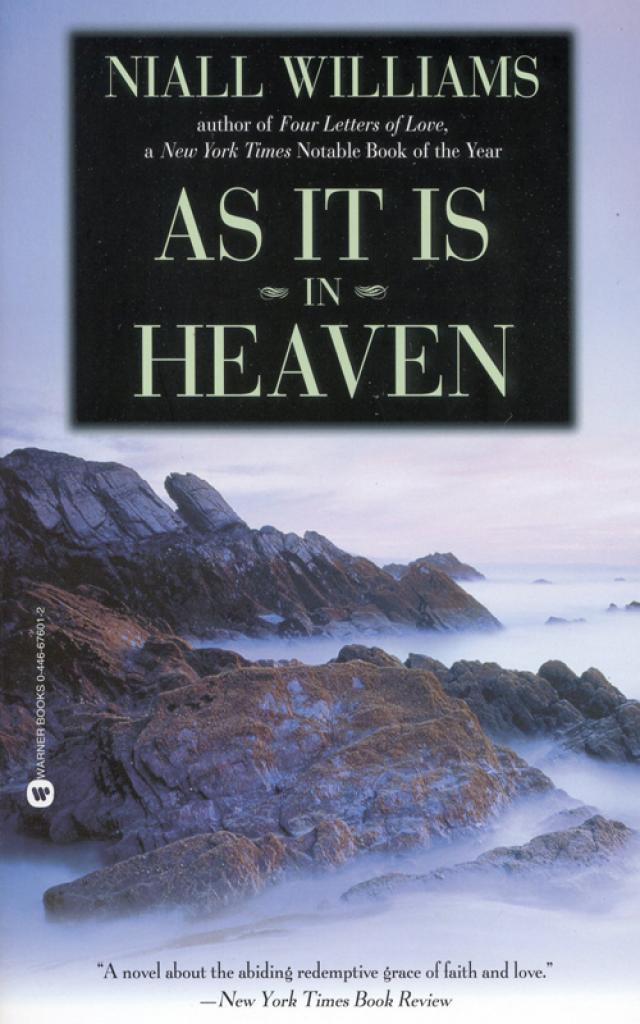
As It Is in Heaven
Niall Williams
Fiction
Time has already stopped for Stephen Griffin when he moves into the little house by the sea. Twenty-eight years old and haunted by death, the tall, awkward, shy schoolteacher is Content to care for his father in Dublin and let life pass him by.Then a miracle appears: a string ensemble from Venice and, with it, a violinist named Gabriella Castoldi. Even though the worldly, beautiful musician seems incapable of giving her heart, love seizes Stephen Griffin ... unbidden and shaking every particle of his spirit.Stephen's ailing father sees it and fears for his naive son. Nelly Grant, the green-grocer, predicted it and welcomes its sheer joy. Moses Mooney, the blind musician, has sensed its coming. None, however, can envision the depth and consequence of this union. For Gabriella will change not only Stephen's life but, in the deepest sense, the lives of everyone around them."As It Is In Heaven" evokes the magical essence of romance and its miraculous ability to grace even the darkest lifewith light. Splendidly crafted and charged with poignancy, it firmly establishes Niall Williams as a master storyteller in the grand tradition of Irish literature.Amazon.com ReviewIt seems right that the lovers in Niall Williams's As It Is in Heaven hail from Italy and Ireland, those sentimental favorites among nations. Williams won kudos and laurels, fans and fame for his first novel, Four Letters of Love, and his second finds him once again illuminating a simple love affair with his own special brand of fine and even brave mawkishness. Dubliner Stephen Griffin, though possessed of a "thin and long" body, is stunted emotionally by the loss of his mother and sister in a tragic car wreck. That is, until one evening he ends up at a tiny concert hall in County Clare, listening to the Venetian beauty Gabriella Castoldi play the violin. Williams writes with fairy-tale breathlessness of the audience: "The room was balmy with delight. And when the people sat again for the slow and romantic melancholy of the Puccini, they were pillowed on a deep and heartfelt gladness.... Stephen looked at the woman whose name he did not yet know and his heart raced." Such mauvish passages abound. Here is an author who never met a bold pronouncement on the subject of Love that he didn't, well, Love. At one point, for instance, Stephen "heard the victory of Love over Death." What makes Williams's writing work--to the degree that it does work--is the way his fuzzy, myopic generalizations are coupled with keen observation: "Stephen danced like a man who had been given wooden legs. They flew out in sharp angles and measured air like a pair of pincers." A stack of suitcases is "an Italian hilltown." At its best, this gentle magical realism reads like Mark Helprin without the irony. And like Helprin, Williams is in thrall to the glamour of geography. Stephen and Gabriella pursue each other through Clare and Kerry to Venice and back. The course of true love never did run smooth, but the bumps here prove none too discouraging. --Claire DedererFrom Publishers WeeklyWilliams, a gifted Irish writer, was known only for nonfiction until his first novel Four Letters of Love reaped a chorus of praise (including a PW Best Books accolade) a couple of years ago. Now he has tried to repeat the trick, but unfortunately the freshness that leaped from the pages has become mere practiced calculation. His hero, Stephen Griffin, is a dim young man declining into premature senility as a history teacher, whose life is transformed by the rather improbable arrival of a beautiful but deeply unhappy young Italian violinist, Gabriella Castoldi, to play a concert at a little West Ireland hotel. Griffin is struck dumb with passion; since symptoms of magic realism abound, smells of white lilies and a general glowing aura convince those around him he is in love. Gabriella, emerging from an unhappy affair, decides to stay on in Ireland; Griffin meets her again and they have a fling; she goes back to Venice and finds she is pregnant; he follows but cannot find her; she comes back; finally, they carry out the wishes of an old blind seafarer (shades of Under Milk Wood's Captain Cat) and build a beautiful little music school by the sea. Williams is a felicitous phrasemaker, and he conjures up some lovely poetic images of weather and seascapes. Passages about the ineffable beauty of music and the emotional impact it can have are touching. But the sense of delighted surprise that was so constant in Letters is notably absent; the story is far more rigidly structured, and the characters, from Stephen's poor dad dying of cancer and trying to give his money away, to a chirpy lady who keeps a greengrocer shop and knows what fruits to sell for all ills of the heart, are tired clich?s. There are pleasures here for those who enjoy the equivalent of a beautifully photographed, sad movie, but Williams had seemed capable of much more. Literary Guild and Doubleday Book Club alternates; author tour. Copyright 1999 Reed Business Information, Inc.
Read online