Cooked: A Natural History of Transformation

Cooked: A Natural History of Transformation

Michael Pollan

Nonfiction / Science / Politics

The New York Times Top Five Bestseller - Michael Pollan's uniquely enjoyable quest to understand the transformative magic of cooking In a culture of celebrity chefs and food reality shows, in countries which are crammed with fresh ingredients flown in from every corner of the Earth, we nonetheless year-on-year wade ever deeper into a great swamp of processed foods. The more we watch food on television, the less food we actually prepare and cook. Michael Pollan's marvellous new book is a clarion-call for the virtues and values of proper cooking - an essential, defining human activity which sits at the heart of our cultures, shapes family life and is in itself hugely enjoyable. Pollan recreates the transformative fundamentals of how we cook, building from the most basic principles: cooking with fire, cooking with water, cooking with air and cooking with earth. Cooked is an extremely funny and surprising plea to Pollan's readers to take control of their own fates and revel again in what should be a lifetime's engagement with the almost magical activity of making food. And it is, of course, about so much more - how cooking can transform both how we think about ourselves and about our families and friends. Reviews: 'Pollan's book is many things, among them a memoir of learning to master the absolute basics of culinary creation: fire, water, air and earth. As Pollan chats with cheesemaking nuns and discovers Walt Whitman's views on composting, he reminds us that cooking used to be all about connection - with the world around us, with other times and cultures, and with those we cook for ... this book [is] both approachable and rewarding' Hephzibah Anderson, *Prospect* About the author: Michael Pollan is the author of Second Nature, A Place of My Own, The Botany of Desire, The Omnivore's Dilemma, In Defence of Food and Food Rules. He lives in California.
Read online
  • 1 060
A Place of My Own: The Education of an Amateur Builder

A Place of My Own: The Education of an Amateur Builder

Michael Pollan

Nonfiction / Science / Politics

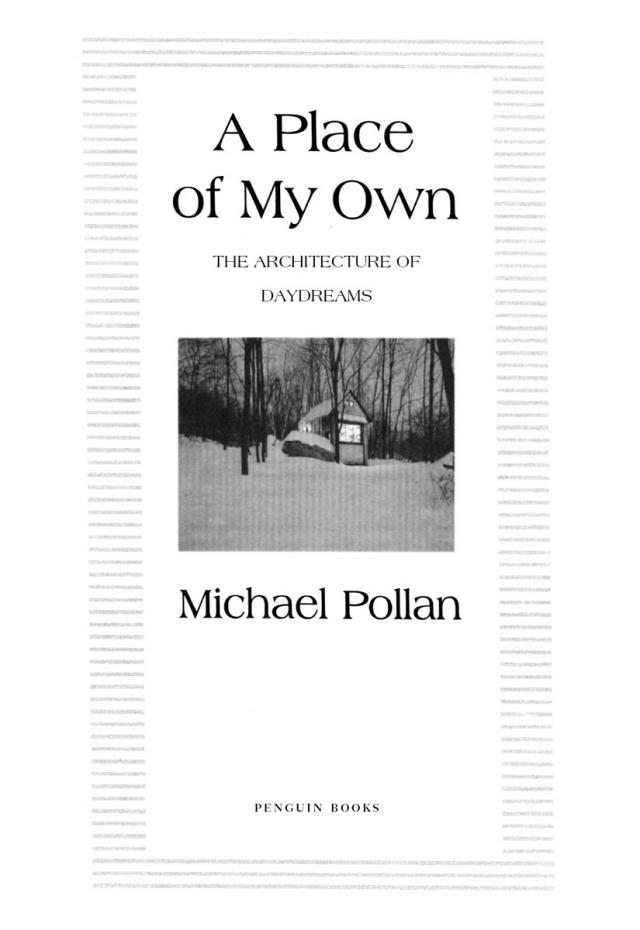
A room of one's own: is there anybody who hasn't at one time or another wished for such a place, hasn't turned those soft words over until they'd assumed a habitable shape? When writer Michael Pollan decided to plant a garden, the result was an award-winning treatise on the borders between nature and contemporary life, the acclaimed bestseller Second Nature. Now Pollan turns his sharp insight to the craft of building, as he recounts the process of designing and constructing a small one-room structure on his rural Connecticut property--a place in which he hoped to read, write and daydream, built with his two own unhandy hands. Invoking the titans of architecture, literature and philosophy, from Vitrivius to Thoreau, from the Chinese masters of feng shui to the revolutionary Frank Lloyd Wright, Pollan brilliantly chronicles a realm of blueprints, joints and trusses as he peers into the ephemeral nature of "houseness" itself. From the spark of an idea to the search for a perfect site to the raising of a ridgepole, Pollan revels in the infinitely detailed, complex process of creating a finished structure. At once superbly written, informative and enormously entertaining, A Place of My Own is for anyone who has ever wondered how the walls around us take shape--and how we might shape them ourselves. A Place of My Own recounts his two-and-a-half-year journey of discovery in an absorbing narrative that deftly weaves the day-to-day work of design and building--from siting to blueprint, from the pouring of foundations to finish carpentry--with reflections on everything form the power of place to shape our lives to the question of what constitutes "real work" in a technological society. A book about craft that is itself beautifully crafted, linking the world of the body and material things with the realm of mind, heart, and spirit, A Place of My Own has received extraordinary praise.
Read online
  • 839
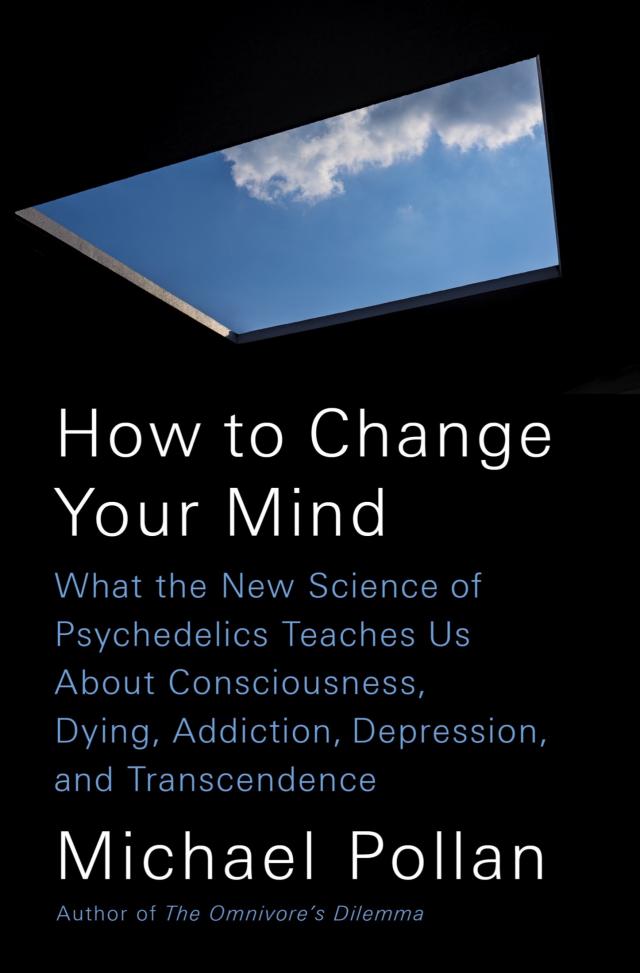
How to Change Your Mind

How to Change Your Mind

Michael Pollan

Nonfiction / Science / Politics

Could psychedelic drugs change our worldview? One of America's most admired writers takes us on a mind-altering journey to the frontiers of human consciousness **When LSD was first discovered in the 1940s, it seemed to researchers, scientists and doctors as if the world might be on the cusp of psychological revolution. It promised to shed light on the deep mysteries of consciousness, as well as offer relief to addicts and the mentally ill. But in the 1960s, with the vicious backlash against the counter-culture, all further research was banned. In recent years, however, work has quietly begun again on the amazing potential of LSD, psilocybin and DMT. Could these drugs in fact improve the lives of many people? Diving deep into this extraordinary world and putting himself forward as a guinea-pig, Michael Pollan has written a remarkable history of psychedelics and a compelling portrait of the new generation of scientists fascinated by the implications of these drugs. How to Change Your Mind is a report from what could very well be the future of human consciousness.
Read online
  • 739
A Place of My Own

A Place of My Own

Michael Pollan

Nonfiction / Science / Politics

Michael Pollan’s unmatched ability to draw lines of connection between our everyday experiences— whether eating, gardening, or building—and the natural world has been the basis for the popular success of his many works of nonfiction, including the genre-defining bestsellers The Omnivore’s Dilemma and In Defense of Food. With this updated edition of his earlier book A Place of My Own, readers can revisit the inspired, intelligent, and often hilarious story of Pollan’s realization of a room of his own—a small, wooden hut, his "shelter for daydreams"—built with his admittedly unhandy hands. Inspired by both Thoreau and Mr. Blandings, A Place of My Own not only works to convey the history and meaning of all human building, it also marks the connections between our bodies, our minds, and the natural world.
Read online
  • 15
183